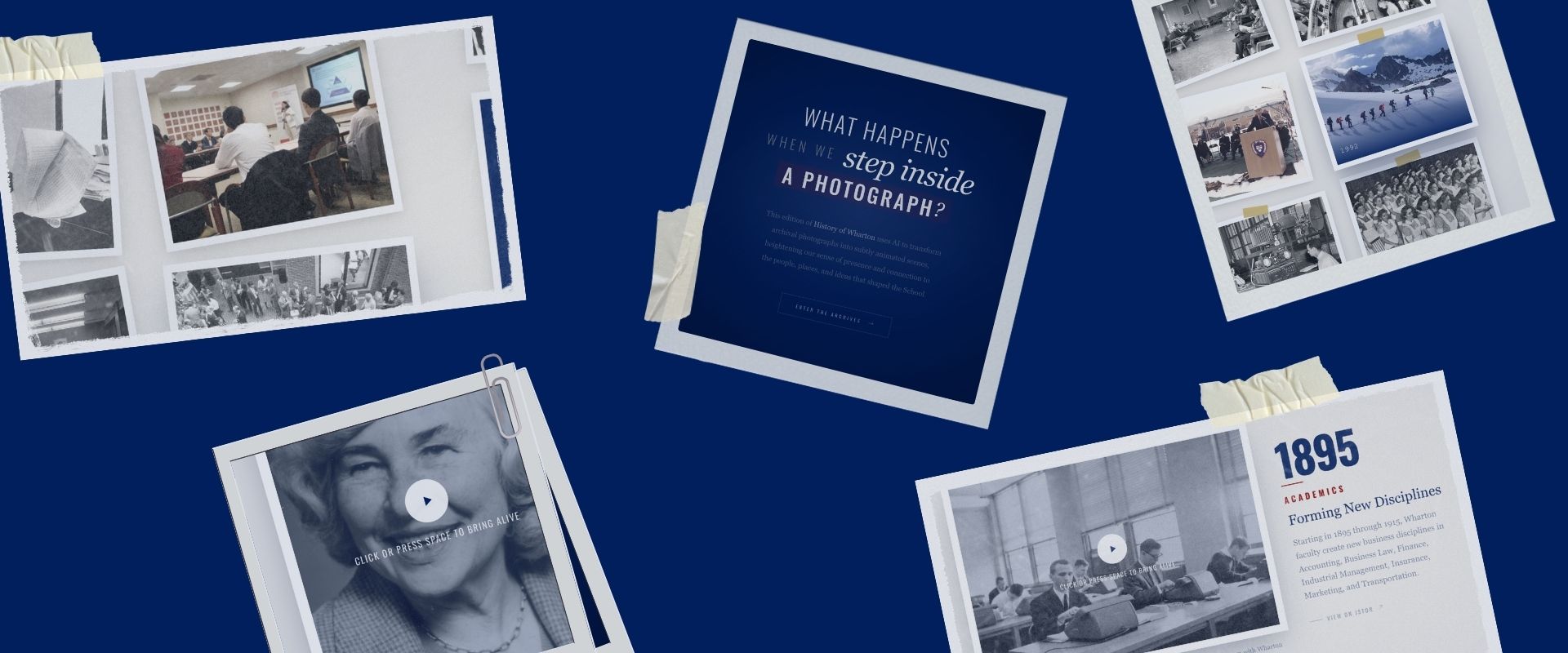
The History of Wharton
Reimagined Wharton's 140-year history as an immersive, AI-animated digital archive, transforming static photographs into living scenes that invite you to step inside the past.
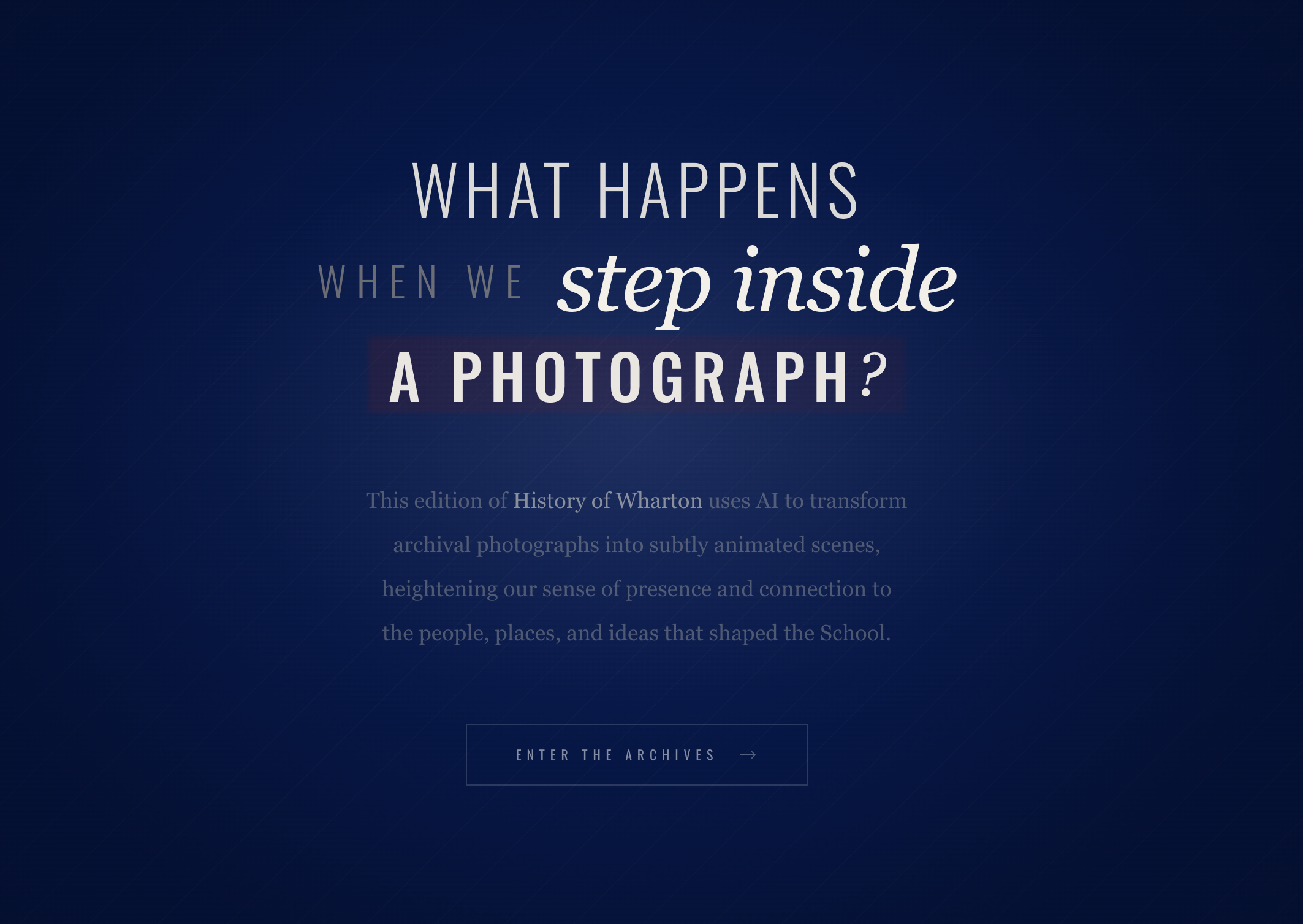
What happens when we step inside a photograph?
Echoes is a reimagination of The Wharton School's official history page. It transforms a collection of archival photographs into an immersive and AI-animated experience. The original site presented Wharton's milestones as a traditional, static timeline with text-heavy entries and a standard carousel. Echoes hopes to heighten our sense of connection to the people, places and ideas that shaped the School from 1881 to the present.
Wharton's history page served its purpose as an informational resource but it did not reflect the interpersonal weight of 140+ years of institutional legacy. The brief was to take the same archival content (the same photographs and milestones) and translate them into a digital experience that feels as significant as the history itself.
The Wharton School of the University of Pennsylvania was founded in 1881 as the world's first collegiate business school. Its history includes milestones like the first MBA class (1921), the first woman MBA graduate (1931), the first business school research center, Nobel Prize winners and pioneering programs in entrepreneurship, healthcare management and international studies. This history spans over thousands of documented moments across nearly 140 years from the University of Pennsylvania's collection.
A history worth more than a bullet list
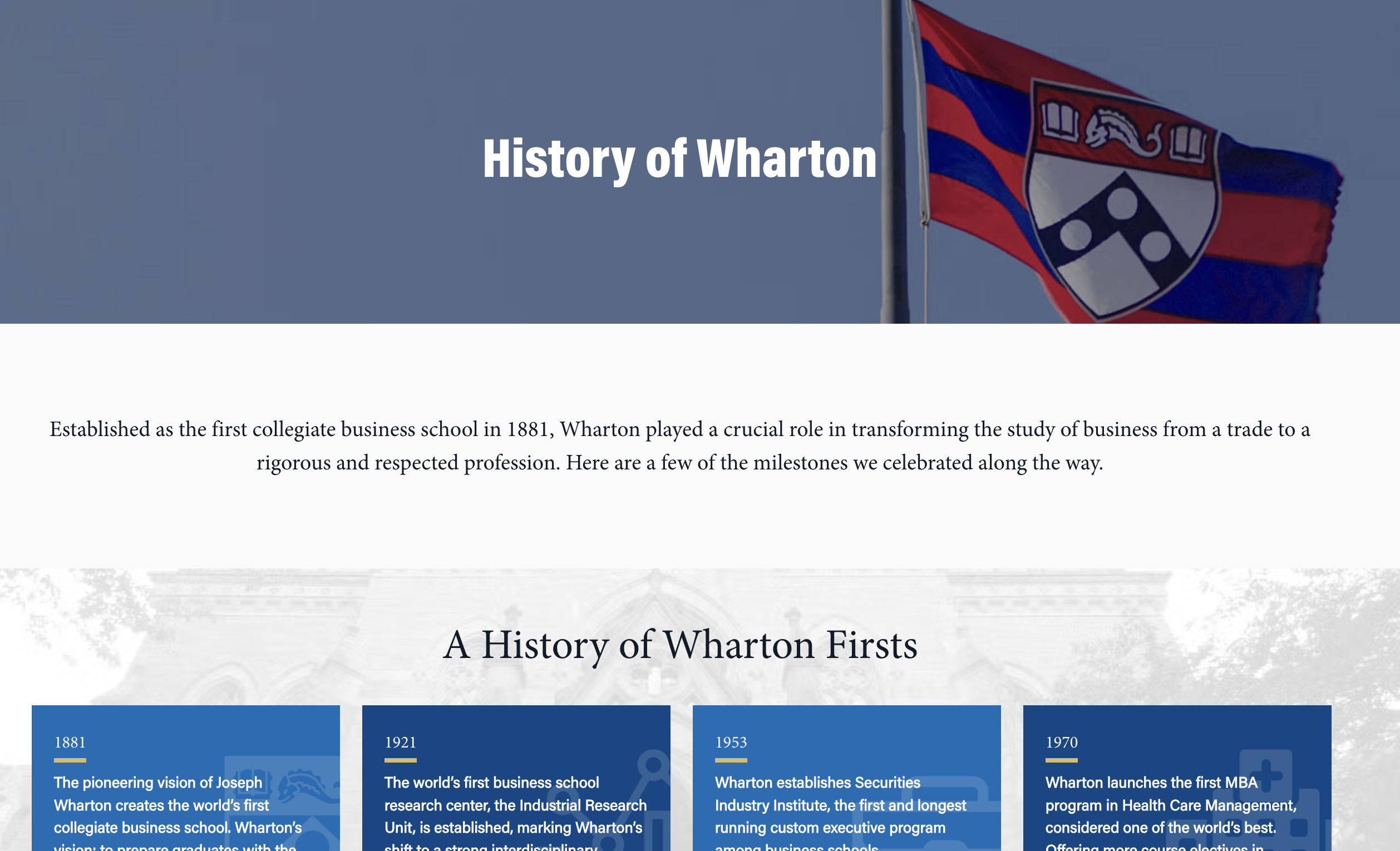
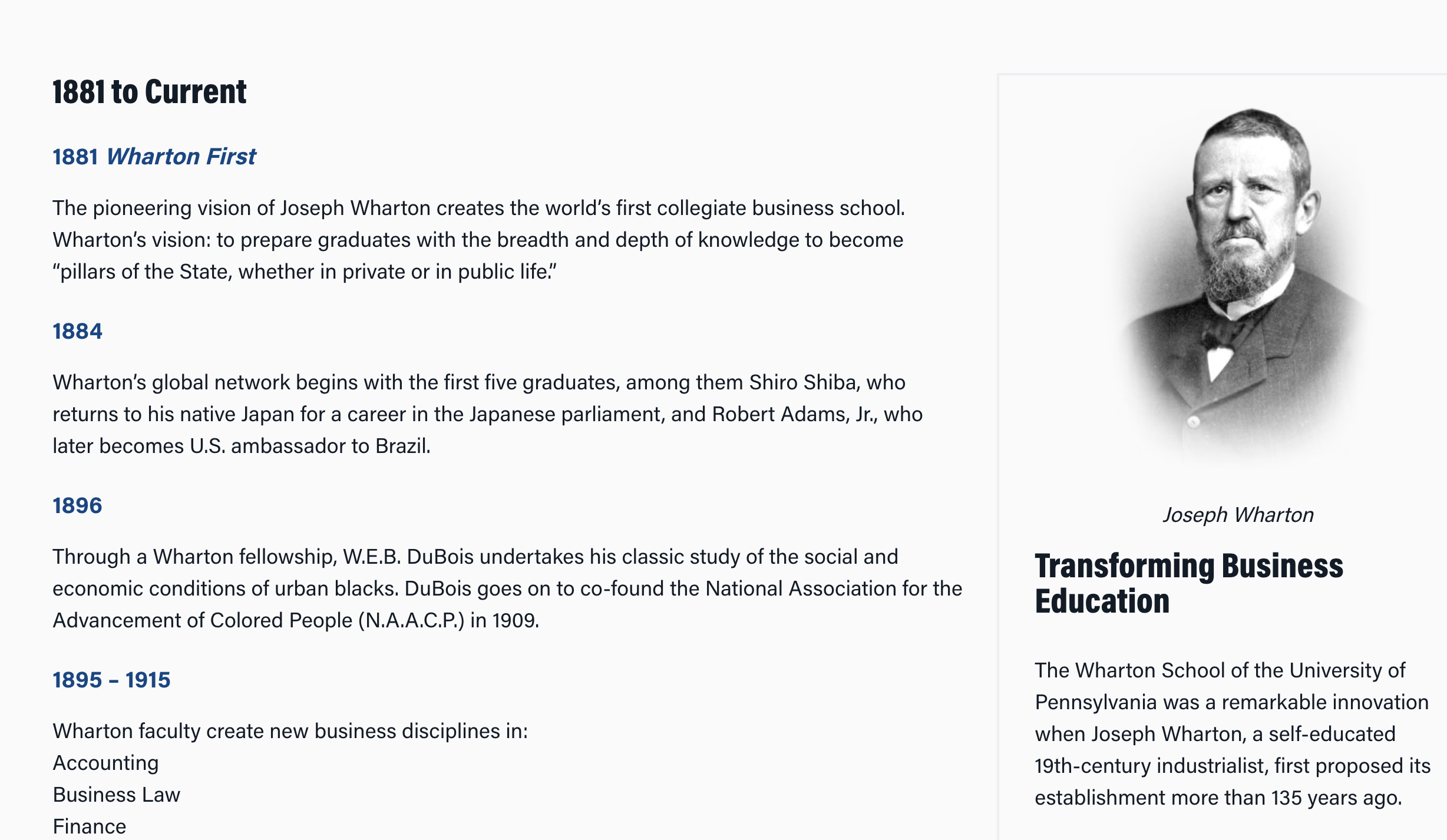
The original Wharton history page presented milestones in a traditional format, a jQuery-based carousel of "Wharton Firsts" at the top, followed by a long chronological list with small images and paragraph descriptions. While well-researched, the experience felt like reading a textbook rather than understanding history. The few archival photographs were reduced to small thumbnails alongside dense text blocks.

I studied how museums, cultural institutions, and editorial publications approach digital archives. The best examples treat photographs as primary artifacts rather than illustrations. They also use spatial and temporal cues to create a sense of journey and they trust visitors to explore rather than simply consume. I also analyzed the original Wharton history content closely, mapping every milestone, photograph, and year to understand the narrative arc from 1881 to present.
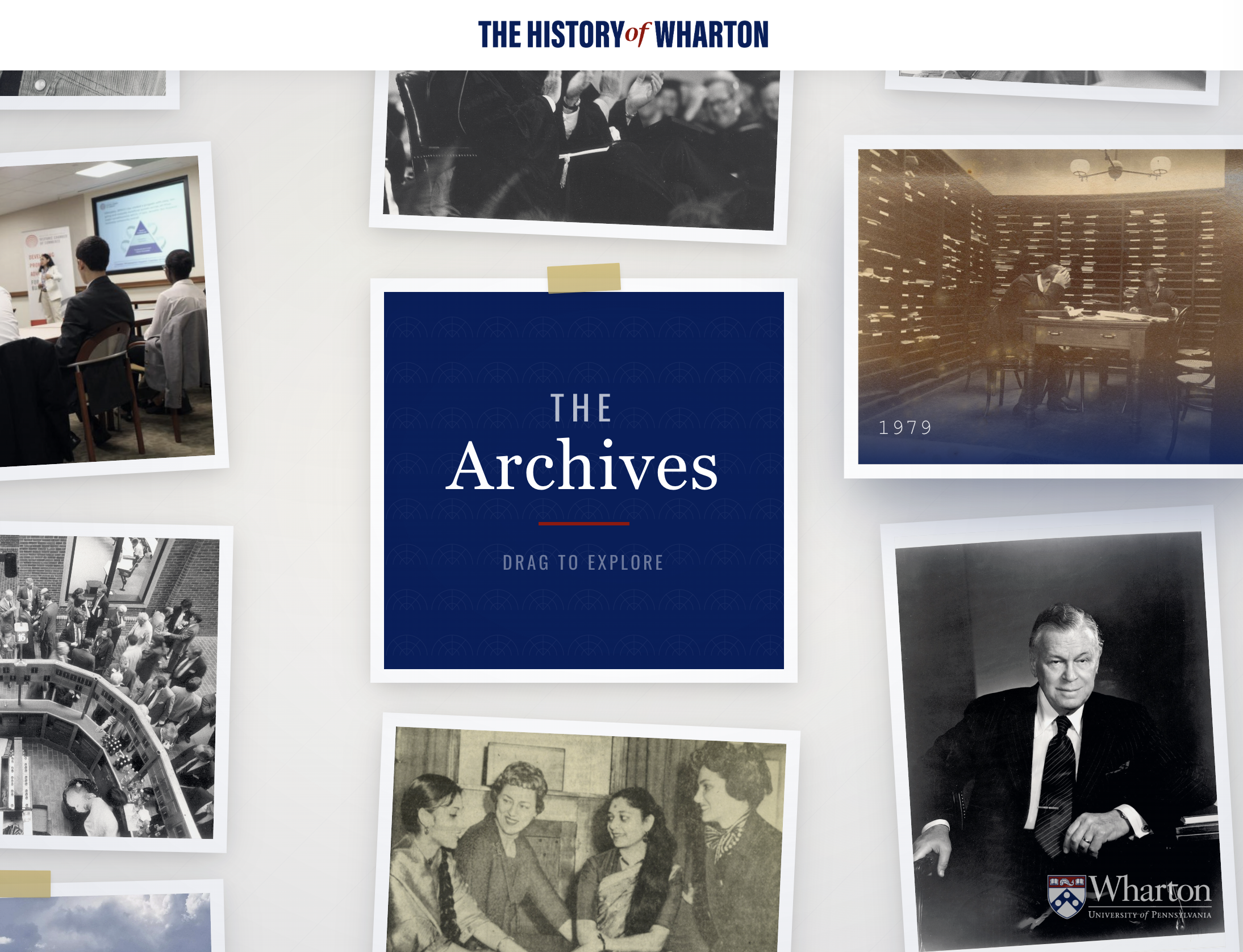
The process began with a content audit of the original Wharton history page, cataloging every milestone, date, description, and associated image from 1881 to present. The design went through several named iterations, each refining the concept. I explored different invitations and experiences for this "journey". The final direction combined the best of each iteration: honoring the Wharton brand and its institutional gravitas, the scattered polaroids to initialize archival feeling and copy that presents proper emotional framing.
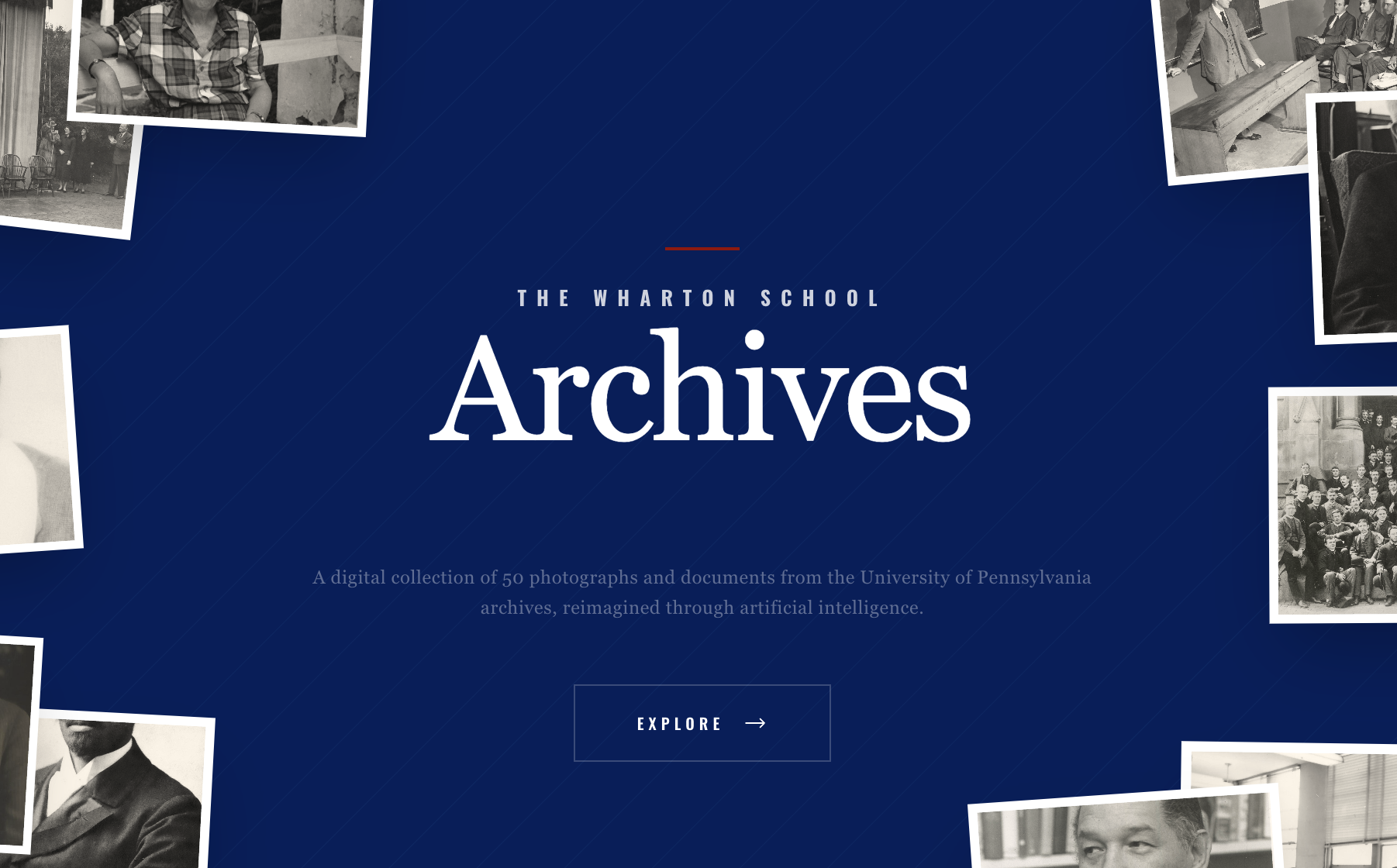
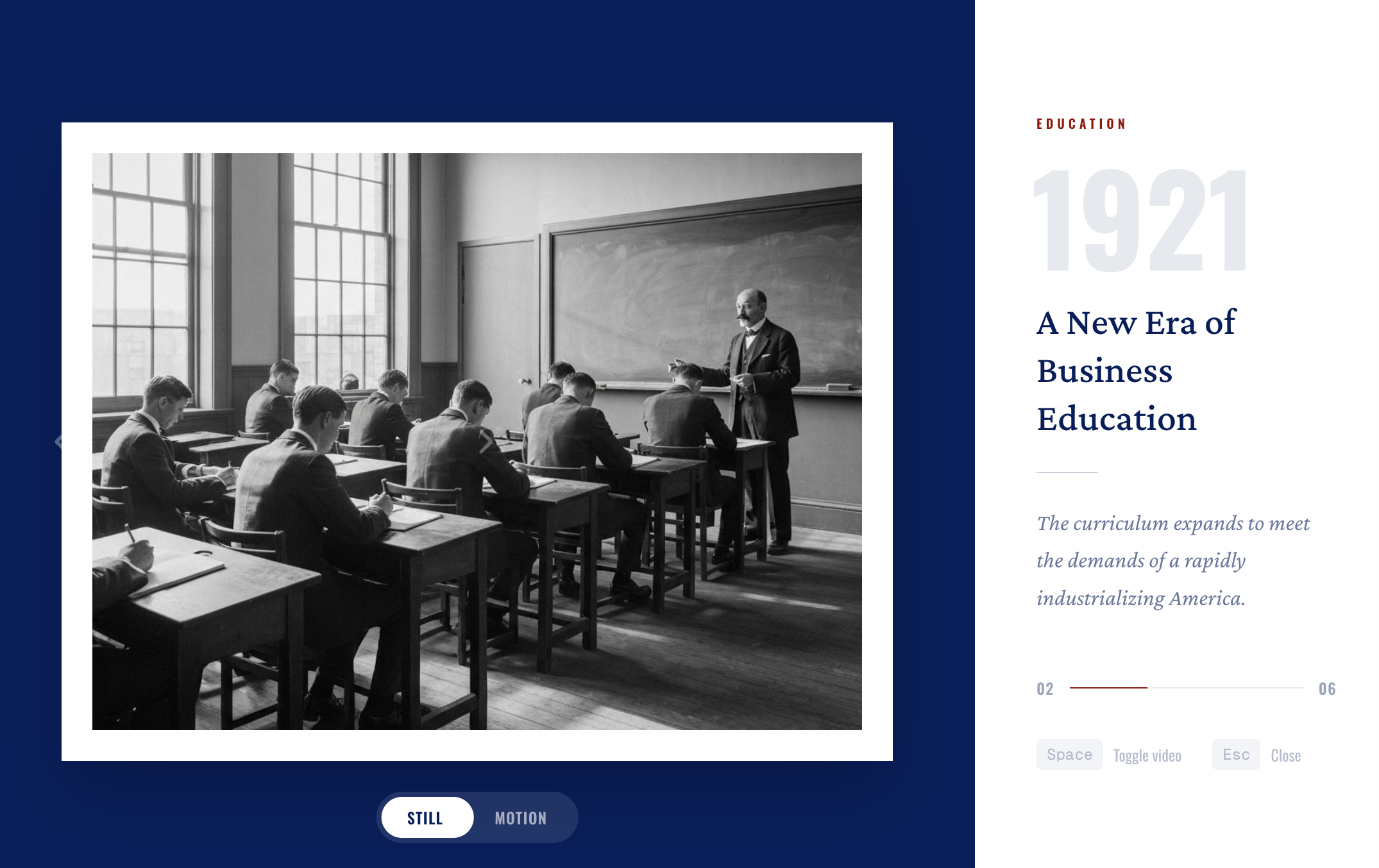
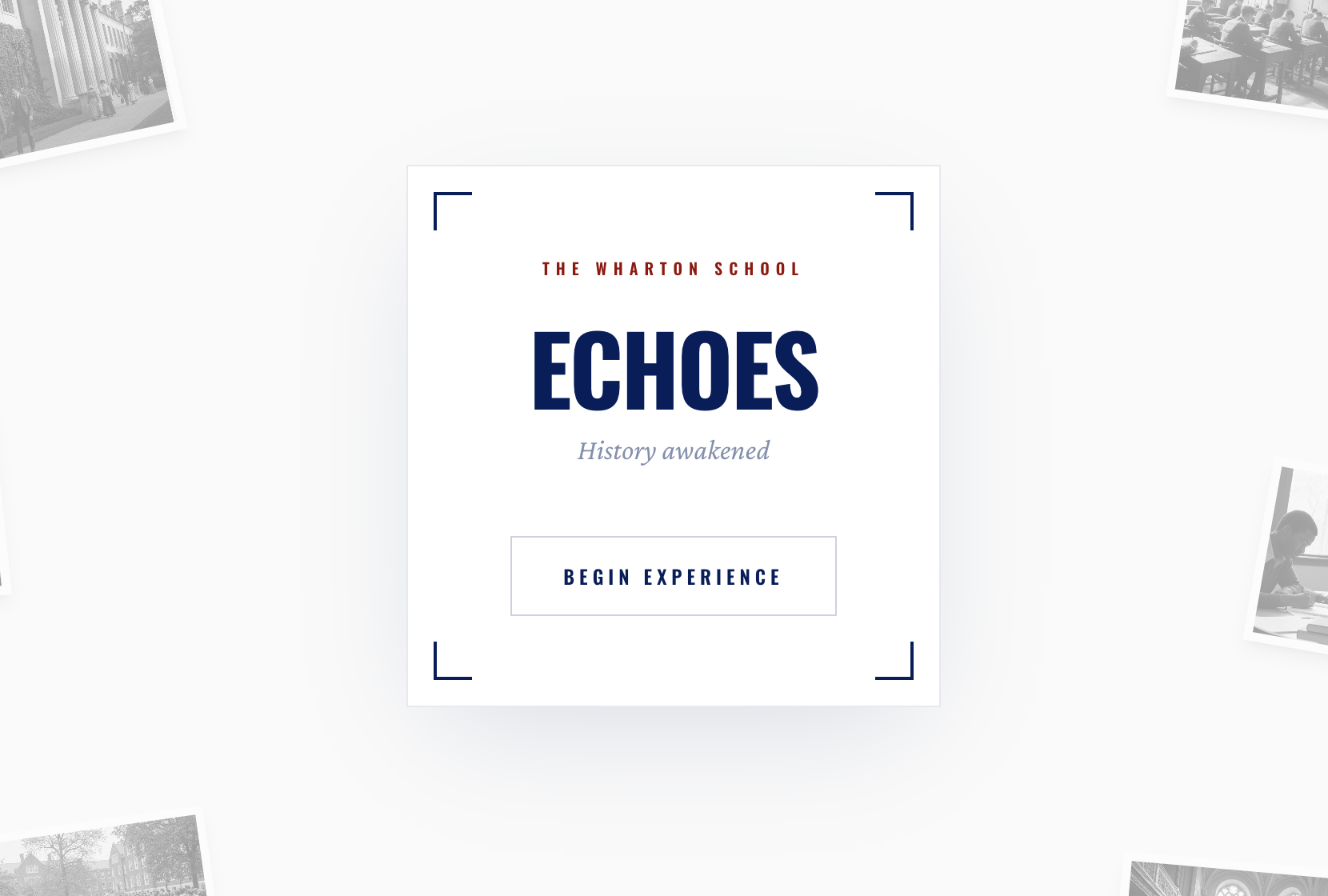
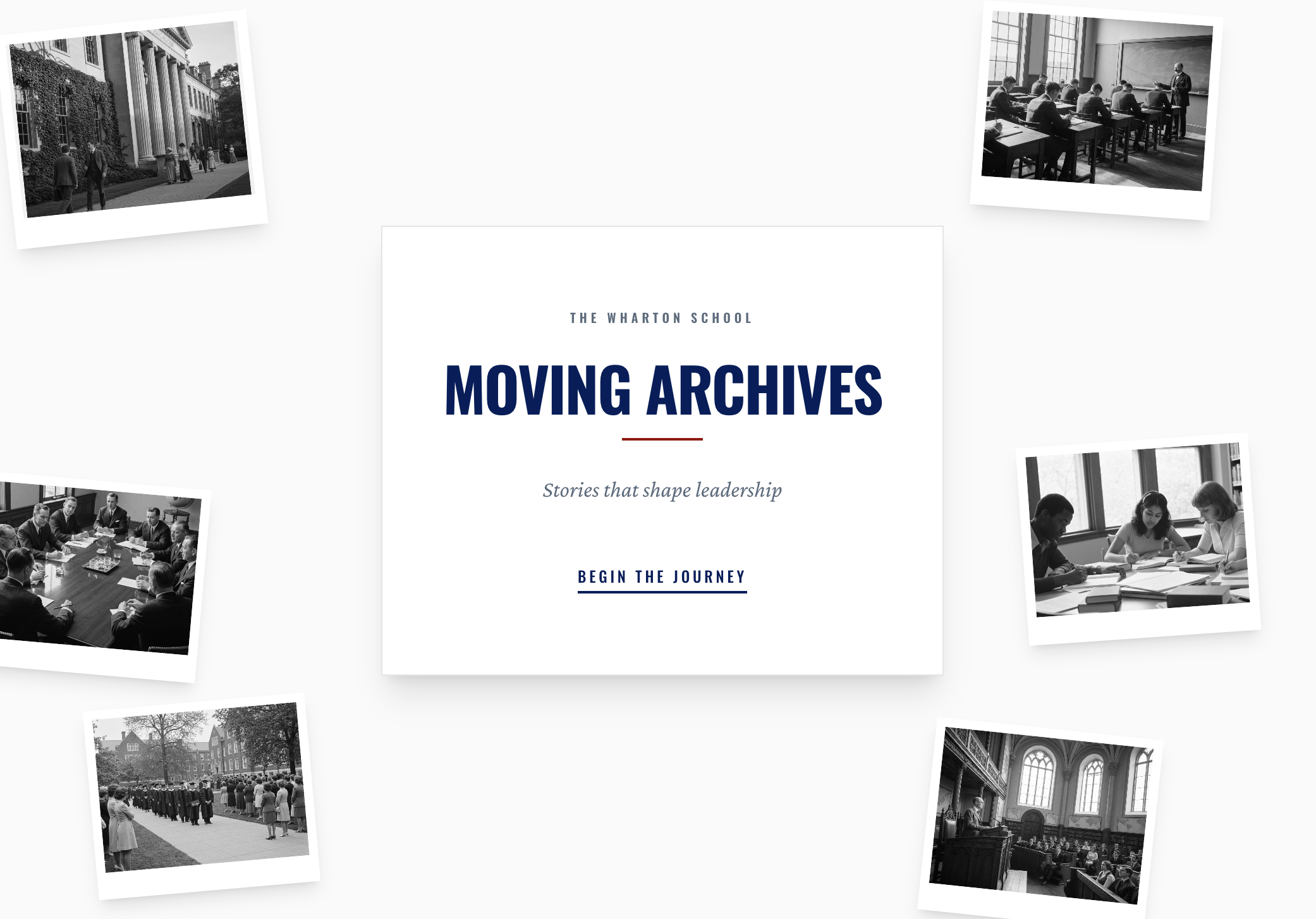
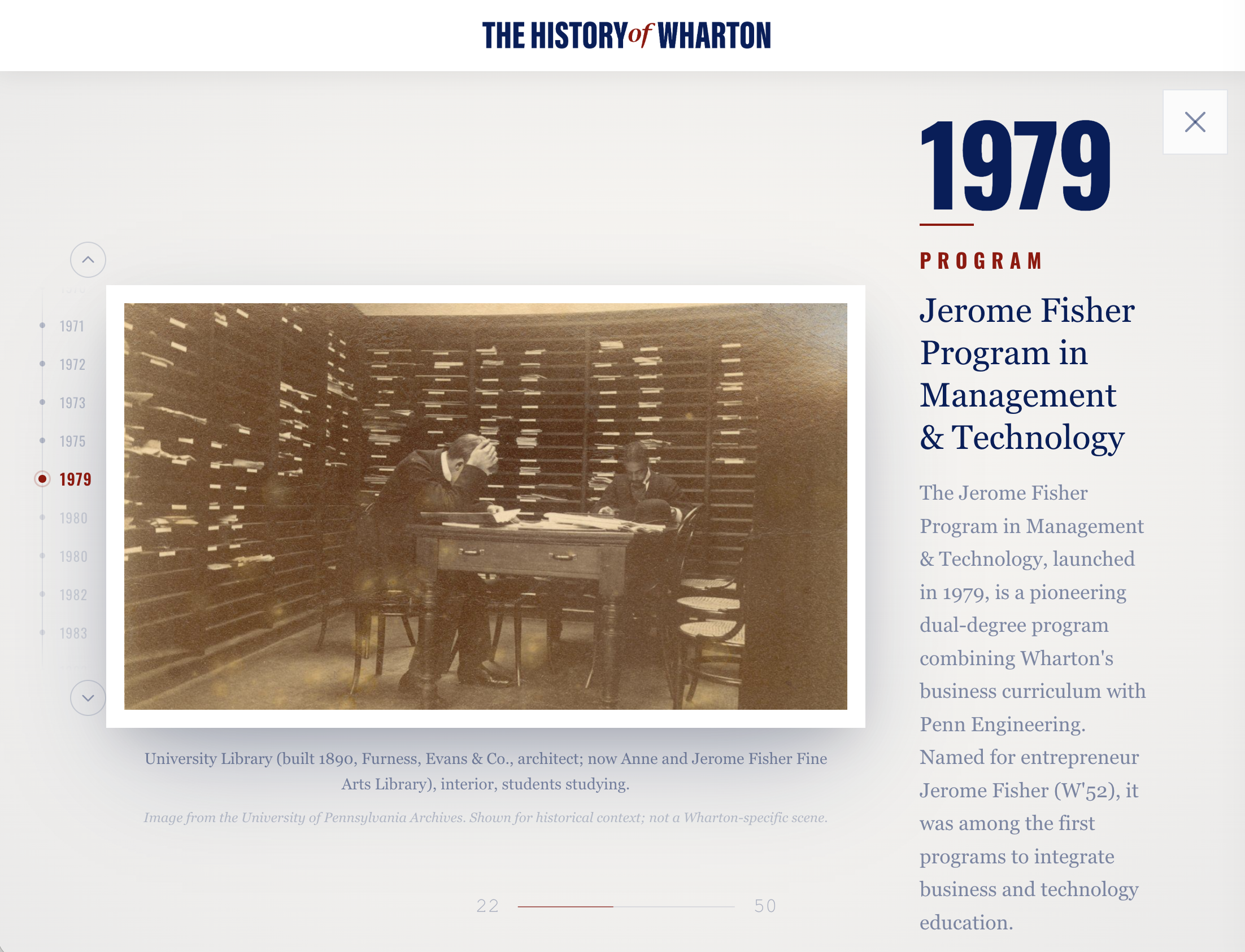
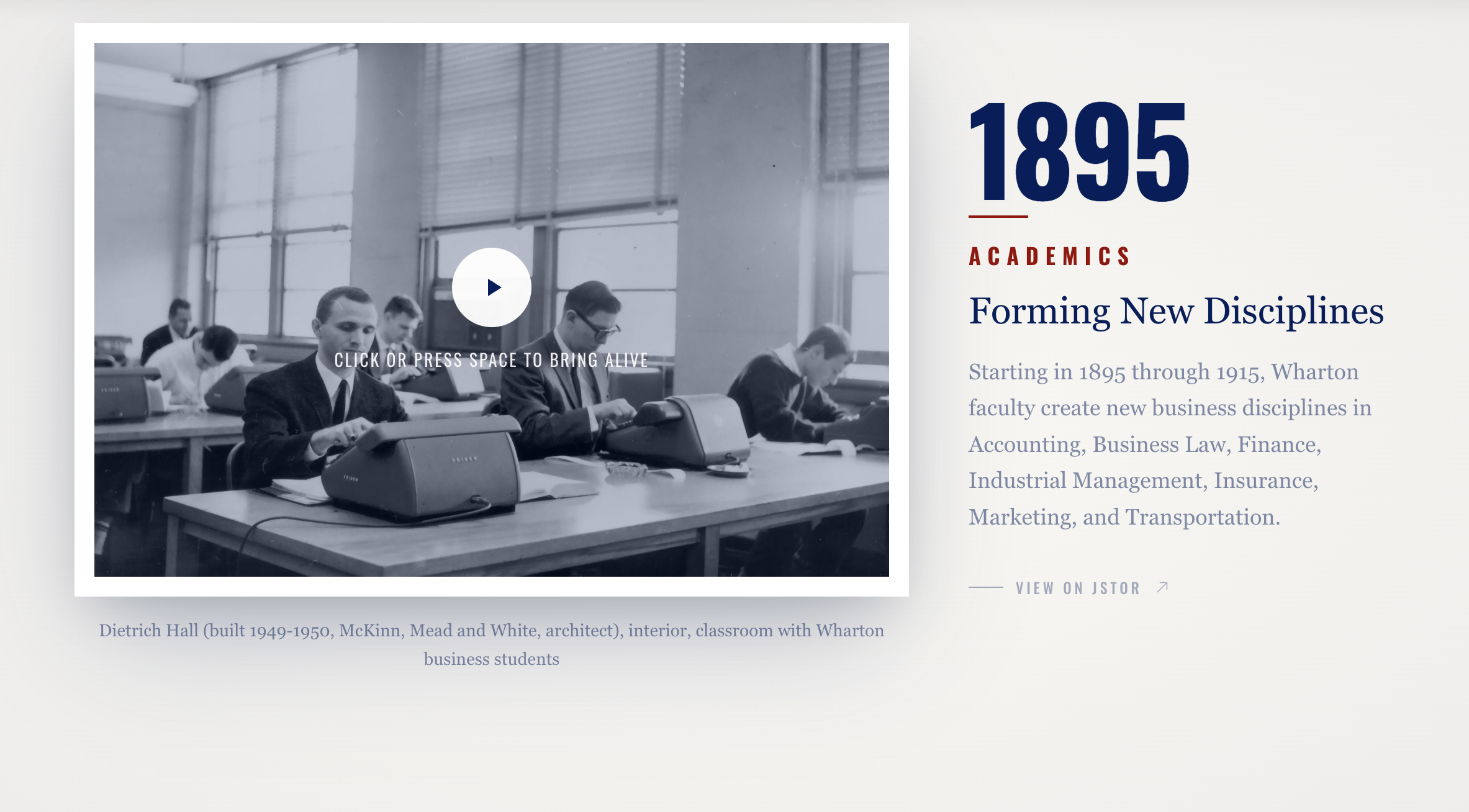
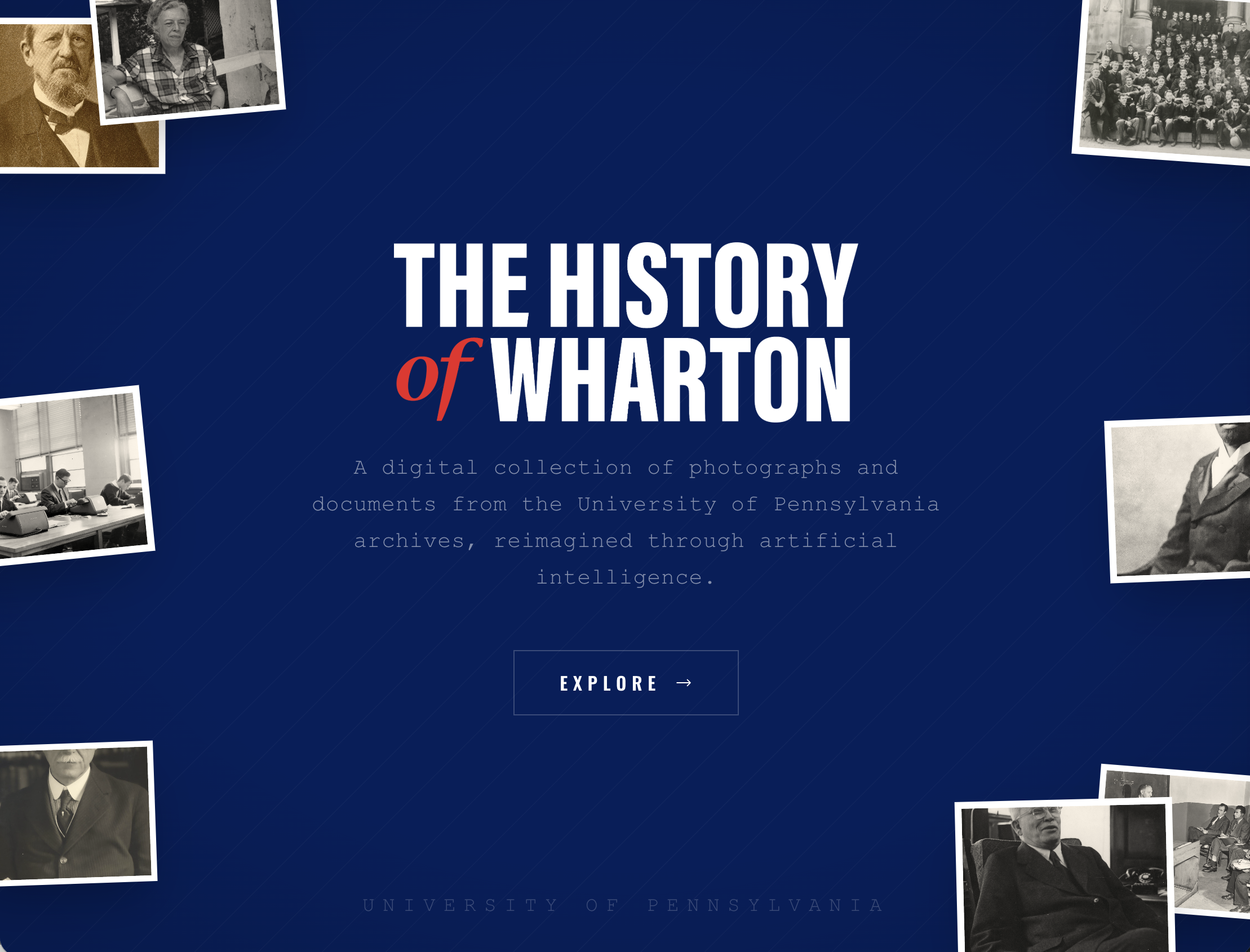
Echoes reimagines the Wharton history as a three-act experience. First, a cinematic landing sequence opens on deep navy with the title "The History of Wharton" surrounded by scattered archival polaroids. Scrolling reveals the central question: "What happens when we step inside a photograph?" paired with a description of the AI-powered approach. Second, an infinite canvas inviting the user to a truly immersive experience with these documents. The scroll creates a physical metaphor for moving through time, you drag to explore. Then, third, a timeline which highlights each milestone individually. A split-screen layout presents the archival image on the left, with a play button overlay reading "Click or press space to bring alive" and the historical context on the right: category, year, title, description, and a link to the original source on JSTOR. By clicking, the site lets visitors choose between the original photograph and its AI-animated version.
"This edition of History of Wharton uses AI to transform archival photographs into subtly animated scenes, heightening our sense of presence and connection to the people, places, and ideas that shaped the School."